


Core Common Principle: Characteristics of Platinum Resistance Sensors
Before discussing the precautions, it's essential to understand a few key characteristics of platinum resistance:
- High Accuracy and Good Linearity: The relationship between resistance and temperature change is nearly linear, making it easy to measure.
- Excellent Long-Term Stability: Platinum metal is highly stable and not prone to drift.
- Fragility: The platinum wire is very thin and susceptible to vibration, shock, and bending stress.
- Self-Heating Effect: The measuring current flowing through the platinum resistor causes it to heat itself, leading to a measured value higher than the actual temperature.
Understanding these characteristics makes it easier to grasp the precautions below.
I. Application in Home Appliances and Precautions
Home appliances such as air conditioners, water heaters, ovens, and refrigerators operate in relatively mild environments, but they have strict cost controls and high requirements for safety and reliability.
Precautions:
- Balancing Cost and Packaging Form:
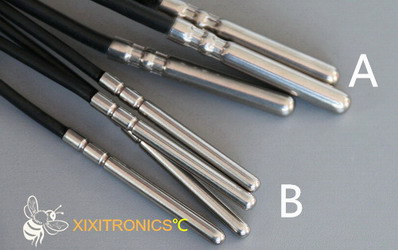
- Key Point: Home appliances typically use glass-sealed or epoxy-resin encapsulated platinum resistors. This type of packaging is low-cost and meets the temperature range for most appliances (e.g., -50°C ~ 300°C).
- Caution: Avoid using them in scenarios where the temperature might exceed their limits (e.g., on the surface of a dry-fired heating element), as this can melt or crack the packaging material. For high-temperature areas (e.g., near an oven heating element), more heat-resistant ceramic packaging should be used.
- Installation and Mechanical Stress:
- Key Point: During installation, be very careful to avoid applying excessive mechanical stress (such as pulling, bending, or crushing) to the leads and the sensor body.
- Caution: Incorrect installation can cause internal platinum wire breakage or poor lead contact, resulting in sensor failure. They are usually secured to the measurement point using clips, adhesive, or metal sleeves.
- Insulation and Sealing:
- Key Point: In humid environments like washing machines, water heaters, and dishwashers, the insulation and sealing of the sensor and its wiring must be ensured.
- Caution: Seal failure can allow moisture ingress, leading to short circuits, sensor corrosion, measurement errors, and even electric shock hazards.
- Response Speed and Installation Location:
- Key Point: The installation location of the sensor directly determines the authenticity of the perceived temperature and the response speed.
- Caution: For example, an air conditioner's room temperature sensor should not be blocked by decorations nor placed close to the air outlet. A refrigerator temperature sensor needs full contact with the air in the evaporator or compartment. Thermal grease is often applied during installation to improve thermal contact.
- Electromagnetic Compatibility (EMC):
- Key Point: Motors, compressors, etc., inside appliances are strong sources of interference.
- Caution: The sensor leads should be kept away from these interference sources as much as possible, or shielded cables should be used. The signal processing circuit on the PCB also needs good filter design to prevent interference from causing control failure or display abnormalities.
- Safety:
- Key Point: For devices that directly or indirectly contact users (e.g., water heaters, space heaters), sensor failure must not lead to overheating risks.
- Caution: Redundant design is often necessary, such as equipping the device with an independent, normally closed thermal protector as a final safety barrier.
II. Application in Industrial Control and Precautions
Industrial environments are harsh and place extremely high demands on accuracy, stability, and reliability. Any error can lead to production stoppages, product scrap, or even safety incidents.
Precautions:
- Selection of Accuracy Class and Wiring Configuration:
- Key Point: In industry, choose Class A or Class B platinum resistors based on accuracy requirements. More importantly, select the wiring configuration based on measurement distance and accuracy needs:
- 2-Wire: Lead resistance adds to the measured value, suitable only for applications with low accuracy requirements and very short leads.
- 3-Wire: The most common industrial method, it can cancel out the effects of lead resistance using a bridge circuit, offering the best cost-performance.
- 4-Wire: The method with the highest accuracy, completely eliminating the influence of lead resistance, used mainly in laboratories or for high-precision measurements.
- Caution: Selection must be based on actual needs. Wrong selection will introduce uncorrectable systematic errors.
- Protection and Packaging:
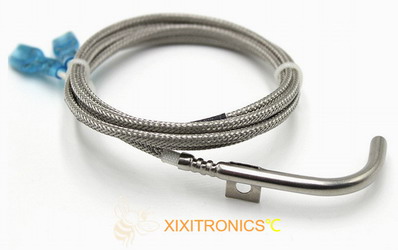
- Key Point: Industrial sites commonly have harsh conditions like vibration, corrosion, high temperature, and high pressure. Therefore, platinum resistors are usually housed inside metal protection sheaths (thermowells).
- Caution:
- Material Selection: The sheath material (e.g., Stainless Steel 304/316, Hastelloy) must withstand the corrosion from the process medium.
- Mechanical Strength: The sheath must have sufficient mechanical strength to withstand fluid impact and pipeline stress.
- Explosion-Proof Requirements: In flammable and explosive environments (e.g., chemical, oil & gas), explosion-proof type RTDs/thermocouples must be used. Their structure contains any internal spark, preventing it from igniting the external atmosphere.
- Insertion Depth and Installation Method:
- Key Point: To ensure measurement of the true temperature of the fluid or equipment, the sensor must have sufficient insertion depth. Typically, it should be inserted to at least 2/3 of its length.
- Caution:
- Installation methods include threaded, flanged, welded, etc., chosen based on pipeline pressure and installation convenience.
- When measuring fluid temperature in a pipe, the sensing end of the sensor should be inserted against the flow direction or perpendicular to it, reaching the center of the pipe where flow velocity is highest, to ensure optimal heat exchange.
- Noise Immunity and Signal Transmission:
- Key Point: Industrial sites have severe electromagnetic interference. Power lines and signal lines must be routed separately.
- Caution:
- Shielded cables must be used, and the shield should be grounded at one end only.
- For long-distance transmission, using a temperature transmitter is highly recommended. It converts the resistance signal into a standard 4-20mA current signal for transmission, which has excellent noise immunity and allows for "2-wire" operation (signal and power share the same two wires), significantly saving wiring costs.
- Regular Calibration and Maintenance:
- Key Point: Industrial measurement systems must establish a regular calibration schedule.
- Caution: Even the most stable platinum resistor can drift under long-term exposure to high temperatures and vibration. It should be periodically removed from the equipment and sent to a standards laboratory for calibration at fixed temperature points (e.g., ice point, boiling point) to ensure the accuracy of its measurements.
Summary Comparison
|
Aspect |
Home Appliances |
Industrial Control |
|
Core Goal |
Cost Control, Safety, Reliability |
Precision, Stability, Reliability, Durability |
|
Packaging Form |
Primarily Glass/Epoxy, Low Cost |
Primarily Metal Sheath (Thermowell), Pressure & Corrosion Resistant |
|
Accuracy Requirement |
Relatively Low, Meets Functional Needs |
High, Class A/B, Linked to Control System Accuracy |
|
Installation Environment |
Relatively Mild, but with Humidity, EMC issues |
Extremely Harsh (High Temp, Pressure, Corrosion, Vibration) |
|
Wiring Configuration |
Simple 2-wire or 3-wire, Integrated on PCB |
3-wire (Mainstream), 4-wire (High Precision) |
|
Signal Processing |
Simple Circuitry, Integrated on Mainboard |
Often Paired with Dedicated Temperature Transmitter (4-20mA) |
|
Maintenance |
Typically "Replace on Failure" |
Planned Periodic Calibration & Maintenance Schedule |
|
Safety Considerations |
Prevent Overheating, Electric Shock, often with Redundant Protection |
Explosion-Proof, Pressure Resistance, Linked to Safety Interlock Systems |
In conclusion, whether for home or industrial use, the key to successfully applying platinum resistance temperature sensors lies in "knowing yourself and your enemy"—understanding both the sensor's own characteristics and limitations, as well as the specific requirements of the application scenario (temperature range, environment, accuracy, cost, etc.). This allows for correct decisions at every stage: selection, installation, use, and maintenance.
Applications of platinum resistance: Blood analyzers, PCR machines, constant temperature incubators, infant incubators, ventilators, sterilization equipment, drug refrigeration and transportation (cold chain).
Reason: These applications have extremely high requirements for temperature accuracy, stability and reliability, and many devices are portable or battery-powered. The low power consumption and high precision advantages of PT1000 can be fully utilized.
Appliances and consumer electronics applications: High-end air conditioners, water heaters, dishwashers, washing machines, intelligent thermostats.
Post time: Oct-01-2025