

Of course! Vehicle temperature sensors are far more critical and widespread than most people realize. They are fundamental to engine performance, emissions control, passenger comfort, and safety.
Here is a detailed breakdown of the different applications of vehicle temperature sensors, categorized by system.
1. Engine Management & Powertrain
This is the most critical application, directly affecting performance, efficiency, and longevity.
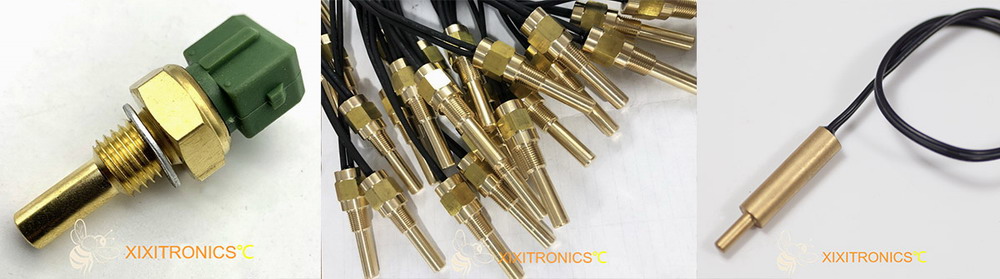
- Coolant Temperature Sensor (ECT):
- Application: Monitors the temperature of the engine coolant.
- Purpose:
- 1. Fuel Mixture Control: A cold engine requires a richer fuel mixture (more fuel). The ECT tells the Engine Control Unit (ECU) to enrich the mixture until the engine reaches its optimal operating temperature.
- 2.Ignition Timing: Adjusts spark timing for optimal combustion and to prevent "knocking" when the engine is cold.
- 3.Idle Speed: Commands a higher idle speed when cold to stabilize operation.
- 4.Radiator Fan Control: Signals the ECU to activate the electric cooling fan when the coolant exceeds a certain temperature.
- 5.Emissions Control: Prevents the activation of certain emissions systems (like EGR) until the engine is warm, ensuring they work efficiently.
- Intake Air Temperature Sensor (IAT):
- Application: Mounted in the air intake stream, often integrated with the Mass Airflow (MAF) sensor.
- Purpose:
- 1.Air Density Calculation: Cold air is denser than warm air. The ECU uses the IAT reading to adjust the fuel mixture accurately, as denser air requires more fuel for a proper air-fuel ratio.
- 2.Prevents Engine Knock: Helps the ECU retard ignition timing if the incoming air is very hot, which can cause pre-ignition.
- Engine Oil Temperature Sensor:
- Application: Monitors the temperature of the engine oil.
- Purpose:
- 1.Performance Protection: In high-performance vehicles, the ECU may limit engine RPM or power output if the oil temperature becomes dangerously high, preventing damage.
- 2.Viscosity Management: Informs the driver or the ECU about the optimal oil viscosity for proper lubrication (e.g., avoiding high revs when oil is cold and thick).
- 3.Cooling System Integration: On some advanced engines, it can trigger additional cooling strategies.
- Transmission Fluid Temperature Sensor:
- Application: Located inside the automatic transmission.
- Purpose:
- 1.Shift Quality: The Transmission Control Module (TCM) adjusts shift pressure and timing based on fluid temperature. Cold, thick fluid requires different shift parameters than hot, thin fluid.
- 2.Overheating Protection: If the transmission fluid overheats (e.g., from heavy towing), the TCM may trigger a "limp mode," change shift patterns, or illuminate a warning light to prevent catastrophic damage.
- 3.Torque Converter Clutch Lockup: Manages when the torque converter locks up for better fuel economy, which is often delayed until the fluid is warm.
- Fuel Temperature Sensor:
- Application: Found in the fuel rail or fuel line, especially in diesel engines and direct-injection gasoline engines.
- Purpose: Fuel Density Compensation: The energy content of fuel changes with temperature. The ECU adjusts the injection pulse width to deliver the precise mass of fuel needed for efficient combustion.
2. Climate Control & Passenger Comfort (HVAC)
These sensors are dedicated to maintaining a comfortable cabin environment.
- In-Car/Ambient Air Temperature Sensor:
- Application: Usually located on the dashboard or near the front grille.
- Purpose: Provides the reading for the digital display of the outside temperature. It also feeds data to the automatic climate control system.
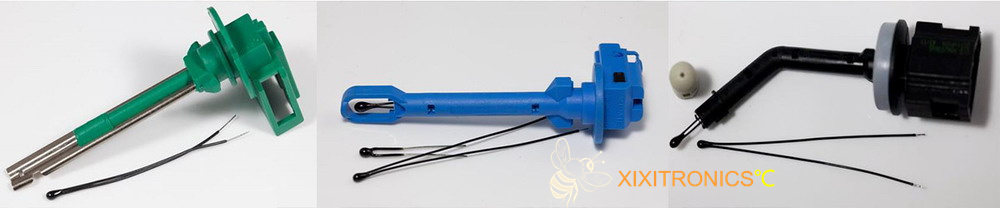
- Evaporator Temperature Sensor:
- Application: Attached to the A/C system's evaporator core (inside the dashboard).
- Purpose: Prevents the evaporator from freezing over. If the temperature drops too low, the sensor signals the A/C compressor to cycle off, ensuring optimal cooling and system protection.
- Sunload/Solar Radiation Sensor:
- Application: Mounted on the top of the dashboard, facing the windshield.
- Purpose: This is often a photodiode that measures the intensity of sunlight entering the cabin. In automatic climate control systems, it tells the HVAC module to increase cooling or fan speed to compensate for solar heat gain.
3. Safety & Driver Assistance Systems
Temperature monitoring is crucial for the reliability of modern safety systems.
- Battery Temperature Sensor (for 12V Battery):
- Application: Mounted on or near the traditional lead-acid battery.
- Purpose: Provides data to the battery management system to optimize charging voltage. A cold battery requires a higher charging voltage, while a hot battery requires less.
- Brake Fluid Temperature Sensor:
- Application: Integrated into the braking system, sometimes within the ABS module.
- Purpose: Monitors for brake fluid overheating, which can lead to brake fade. It can trigger a warning to the driver or, in advanced systems, pre-emptively adjust brake assist.
- Tire Temperature Sensors (in TPMS):
- Application: Part of the Tire Pressure Monitoring System (TPMS) sensors inside the tire.
- Purpose: Monitors air temperature inside the tire. Since pressure is directly related to temperature, this data is used to calculate a more accurate pressure reading and warn of potential overheating from under-inflation or overloading.
4. Electric & Hybrid Vehicles (EVs/HEVs)
These vehicles have an entirely new set of critical temperature monitoring requirements.
- High-Voltage Battery Pack Temperature Sensors:
- Application: Multiple sensors are placed throughout the high-voltage (HV) traction battery.
- Purpose: This is arguably the most important sensor in an EV.
- 1.Prevents Thermal Runaway: Continuously monitors for overheating, which can lead to fire.
- 2.Optimizes Performance & Charging: The Battery Management System (BMS) uses temperature data to regulate active cooling/heating, manage discharge/charge rates, and prevent damage. Fast charging is often limited if the battery is too cold or too hot.
- 3.Cell Balancing: Ensures even temperature distribution for longevity.
- Electric Motor & Inverter Temperature Sensors:
- Application: Embedded in the traction motor and power inverter.
- Purpose: Protects these expensive components from overheating. The ECU may reduce power output (derate) if temperatures approach critical limits, similar to a "limp mode" in a combustion engine.
- Power Electronics Coolant Temperature Sensor:
- Application: In the dedicated cooling loop for the battery, motor, and inverter.
- Purpose: Manages the thermal management system, activating pumps, radiators, and sometimes refrigerant-cooled chillers to maintain optimal operating temperatures for all HV components.

In summary, from the core function of making the engine run properly to ensuring your A/C blows cold air and your EV's battery doesn't overheat, temperature sensors are indispensable, silent guardians of a modern vehicle's performance, efficiency, and safety.
Post time: Oct-15-2025